Maria Cuenca-Cambronero
TRANSPONDER - Biodiversa+ 2022-64
TRANSnational biodiversity and ecosystem assessment approaches for PONDscapes in EuRope.
Exciting news!
Preliminary results on functional diversity of zooplankton. Have a look to the poster!
About the project
In this project, I contributed to developing the main ideas for the application process (Spanish team), and I am currently leading WP4, which focuses on assessing the functional diversity of ponds. Functional diversity is an important dimension of biodiversity, providing insights into ecosystem functioning and resilience. First, we will analyse trait distribution patterns based on species-specific trait values from the literature. Secondly, we will directly quantify trait distributions from field samples using individual measurements of zooplankton and macroinvertebrates. Finally, we will assess which environmental factors drive patterns of functional trait diversity, including a gradient of land use along a latitudinal gradient and seven European countries: Belgium, Denmark, Germany, Hungary, Spain, Switzerland and Turkey.
In line with the project’s aims, we obtained funding from the AGAUR organisation to support the recruitment of a PhD student, Irum Shazhadi, whom I currently supervise.
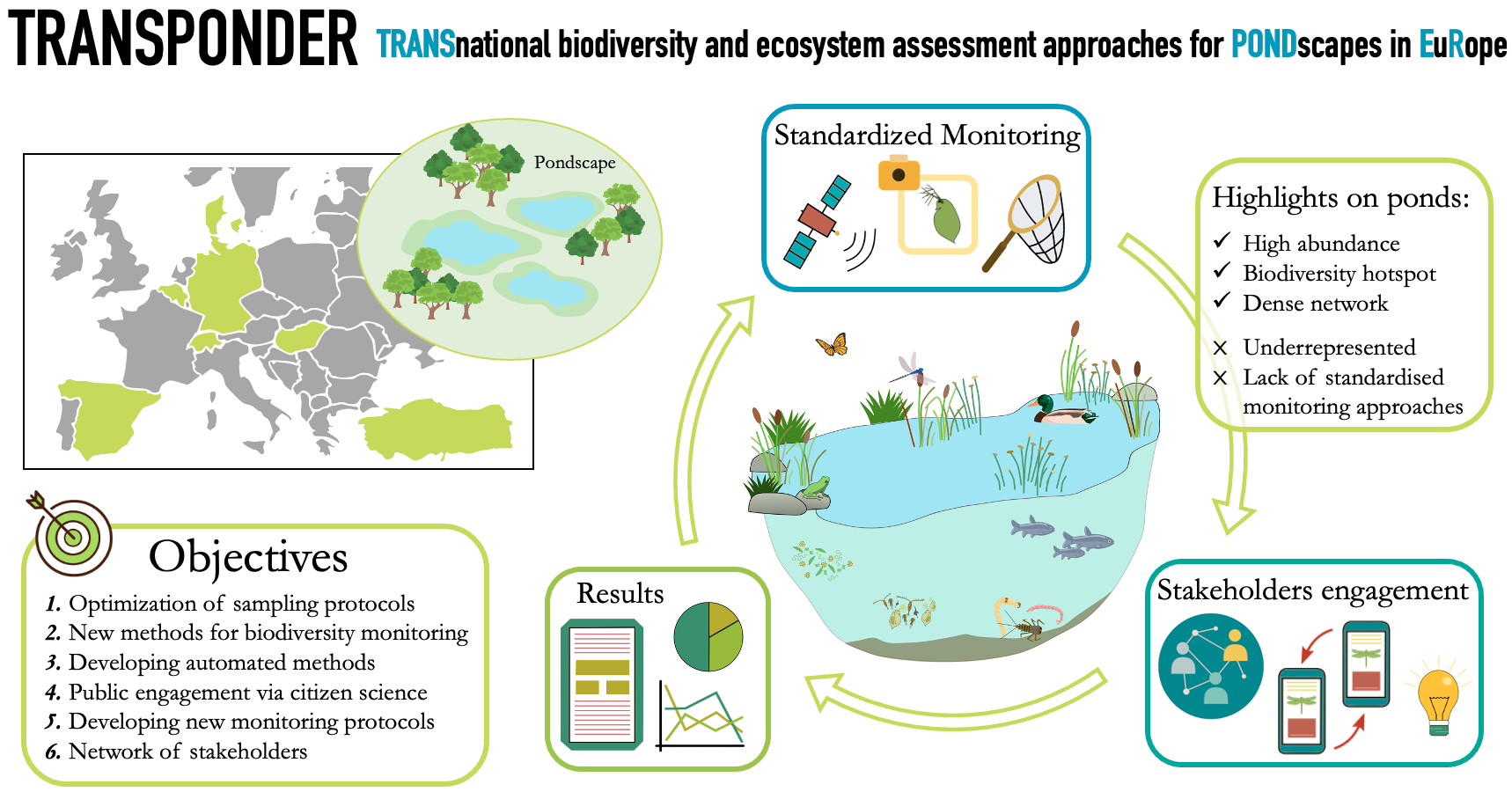 TRANSPONDER aims to improve our ability to assess biodiversity and ecosystem change in overlooked and valuable pond ecosystems by optimising tools and developing protocols for biodiversity monitoring (Fig. 1 - Graphical representation of the project). This involves establishing approaches to select sites for monitoring, standardising, and automating the monitoring procedures in a transnational context. It also aims to build a network for sharing expertise and expectations, increasing the project's impact across a wide range of stakeholders and policy managers.
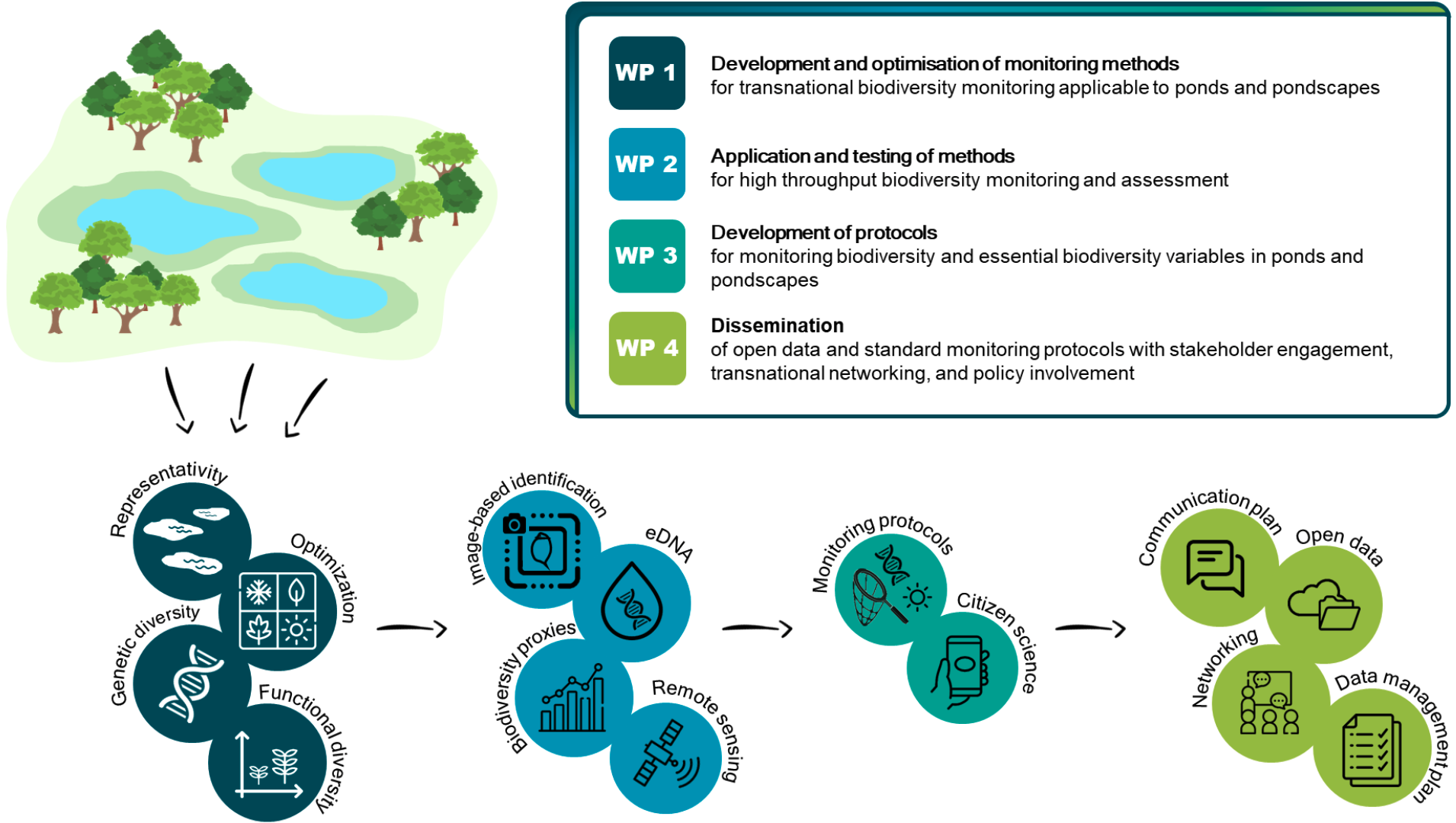 TRANSPONDER consists of four work packages (Fig. 2 – Different packages of the project): WP1 capitalises on existing data, targeted field work and novel methodological approaches across seven European countries to develop and optimise a standardised methodology to assess the biodiversity of ponds. WP2 focuses on how enhanced automation, fostering high-throughput analyses, can be integrated into assessments of pond biodiversity. WP3 focuses on developing generally applicable monitoring protocols. WP4 will engage stakeholders at both the regional and European levels, raising the profile of ponds and their key role in biodiversity conservation and policy.
Sampling campaign